Trimming is not just about how a tree looks. Done right, it keeps your tree healthy, keeps branches off your roof and wires, and stops small problems from becoming expensive ones.
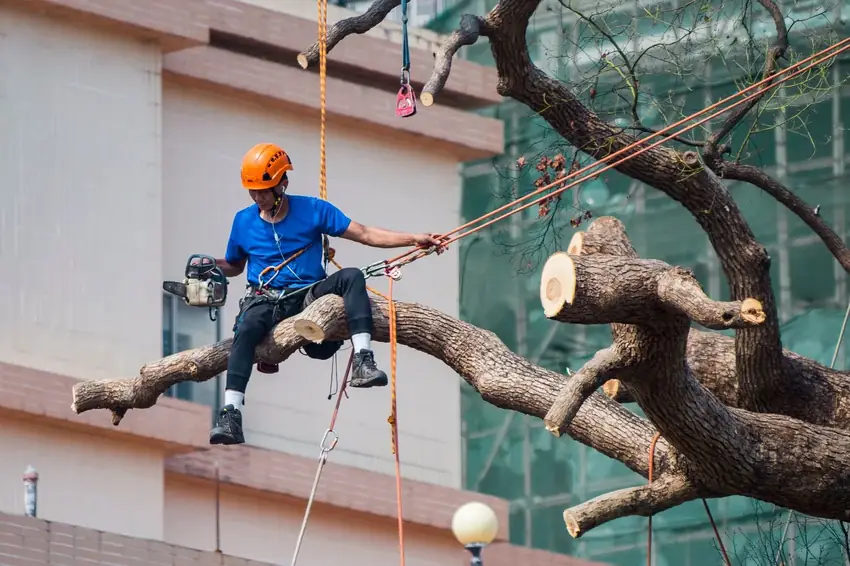
A tree that has never been trimmed grows however it wants — and in a Philadelphia rowhome yard, that usually means trouble sooner or later. Branches creep over the roof and rub the shingles every time the wind blows. Limbs reach toward power lines. A heavy, crowded canopy catches the wind like a sail during a storm, and the weakest branch is the one that comes down, often onto a car, a fence, or a roof. Regular tree trimming in Philadelphia prevents most of that. Removing dead wood takes weight off the tree and removes the branches most likely to fail. Thinning the canopy lets wind pass through instead of pushing against it, and it lets sunlight reach the inner branches and the lawn below. It is routine maintenance, not cosmetic work, and a tree that is trimmed on a sensible schedule will outlive and outperform one that is left alone until something breaks.
People use trimming and pruning as if they mean the same thing, and for most homeowners the difference barely matters — but it helps to know what you are asking for. Trimming usually means shaping the tree and cutting back overgrowth: branches over the roof, limbs crowding a driveway, a canopy that has grown into the neighbour's yard. Pruning is the health work — removing dead, diseased, or crossing branches, and making careful cuts that help the tree heal and grow in the right direction. In practice, a good crew does both on the same visit. When we come out for a free estimate, we look at the tree, tell you which branches need to come off and why, and explain what the tree should look like when we are done. If you want the full comparison, our guide on tree trimming vs. pruning explains it in detail, and our tree pruning service covers the health side of the work.
Late winter is the best time to trim most trees in Philadelphia. The tree is dormant, there are no leaves in the way, and the crew can see the structure clearly and make clean cuts. Cuts made in late winter heal quickly once spring growth starts, and there is less risk of spreading disease while insects are inactive. That said, dead or dangerous branches should come off whenever they are found — you do not wait until February to remove a limb hanging over your roof. Summer trimming is fine for shaping and light work, and it is the right time to deal with fast-growing species that have shot up since spring. Fall trimming is best kept light, because fresh cuts made just before cold weather can leave a tree exposed. Our post on the best time to trim trees in Philadelphia covers the seasonal detail, but the short version is simple: dormant-season trimming for the main work, and urgent hazards handled the week you spot them.
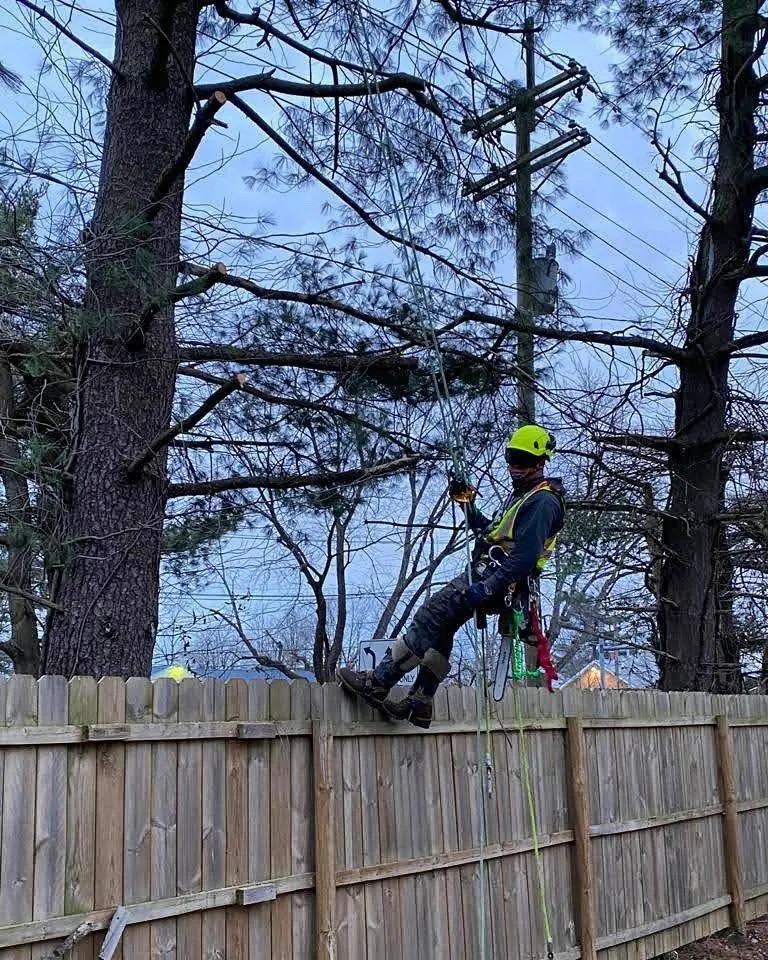
A professional trimming visit starts before anyone climbs. The crew walks the property with you, looks at the tree from the ground, and agrees on what comes off: dead wood first, then branches touching the house or wires, then shaping. Climbers work with ropes and harnesses, or from a bucket truck where the tree and the yard allow it, and branches are lowered by rope rather than dropped — that is what keeps your roof, fence, and garden beds intact. Larger limbs are cut in sections so nothing heavy falls uncontrolled. Everything that comes off the tree is chipped or hauled away the same day, and the crew rakes the yard before leaving. You should never be left with a pile of branches to deal with yourself. That is the difference between a licensed, insured crew and a person with a chainsaw and a ladder: planning, rigging, and cleanup are part of the job, not extras.
A few signs mean you should not put trimming off. Branches touching or hanging over your roof are the most common — they scrape shingles, clog gutters with leaves, and give squirrels a bridge into your attic. Dead branches are easy to spot once the leaves are out: bare limbs on an otherwise green tree, or bark peeling away from the wood. Branches growing into power lines are a safety issue and need a crew that knows how to work around them. A lopsided canopy, where one side has grown far heavier than the other, puts uneven stress on the trunk and is more likely to split in a storm. And if your tree has not been trimmed in five years or more, it is overdue — most Philadelphia trees benefit from trimming every three to five years, sooner for fast growers. If you see any of these signs, call for a free estimate. We will look at the tree, tell you honestly whether it needs work now or can wait, and give you an exact price for your tree.
We serve Northeast Philadelphia, Fox Chase, Bustleton, Olney, Germantown, Mount Airy, Chestnut Hill, Roxborough, Manayunk, and Rhawnhurst.
Most trees benefit from trimming every three to five years. Fast-growing species and trees near houses or wires may need attention sooner. Dead or hazardous branches should be removed whenever they are found, whatever the season.
Proper trimming helps a tree, it does not hurt it. Clean cuts in the right places let the tree heal and grow stronger. Damage comes from topping — cutting the top off a tree — or from removing too much canopy at once. A trained crew will never do either.
Yes. All branches, leaves, and debris are chipped or hauled away the same day, and the yard is raked before we leave. Cleanup is included in the estimate — you will not be left with a pile to deal with.