A fallen tree is frightening, but the steps you take in the first hour matter. Here is exactly what to do — and what not to do — after storm damage in Philadelphia.
When a tree comes down in a storm, the first job is not the tree — it is people. Check that everyone in your household is safe and unhurt. If a tree has fallen on your house, stay out of the rooms underneath it until you know the structure is sound: a heavy limb can crack roof joists or ceiling beams in ways you cannot see from inside. Keep children and pets away from the fallen tree, and if the tree has blocked your driveway or the street, do not try to drive around it — there may be wires or unstable limbs hidden in the debris. Philadelphia storms often bring a second wave of wind and rain, so stay alert even after the worst seems to pass. Once everyone is safe, you can start thinking about the tree itself.
The most dangerous thing about a fallen tree is what it brings down with it. If the tree is touching a power line, or if wires are on the ground anywhere near it, stay at least 30 feet away and treat every wire as live, even if it looks dead. Do not touch the tree, do not touch fences or metal objects near the tree, and do not try to move branches off a line yourself. Call 911 if wires are sparking or arcing, and call PECO to report the outage and the downed line. Only after the power company has confirmed the line is safe should any tree crew begin work. Our crews will not work on a tree that is in contact with a live line — nobody should. This is the one situation where waiting is the right call, and it is always worth the wait.
Before anything is moved, take photos and short videos of the damage from several angles. Photograph the tree, the damage to your house, fence, or car, and the overall scene. If the tree came from a neighbor's yard, photograph the base and the trunk so the condition of the tree is visible. This documentation is important for insurance claims and for any later questions about whose tree it was. Write down the date and time of the storm, and keep receipts for any emergency work. If water is coming in through a damaged roof, cover the area with a tarp if you can do so safely from the ground — do not climb onto a damaged roof. Your insurance company will want the documentation, and the sooner you collect it, the easier the claim will be.
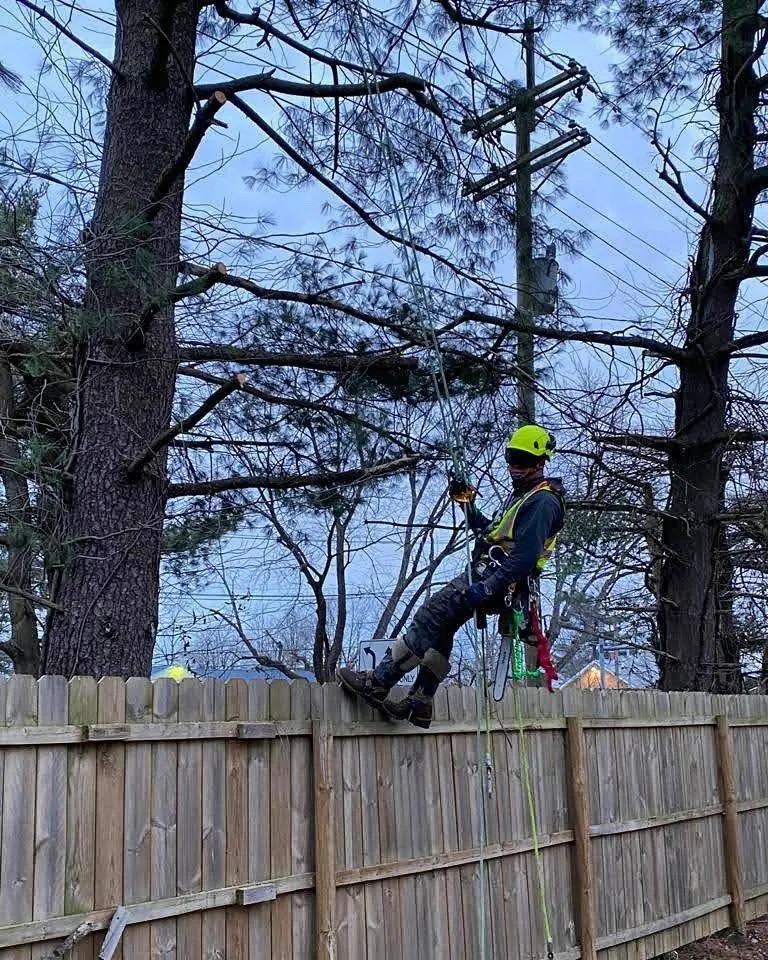
Philadelphia Tree Works LLC is open 24 hours, Monday through Sunday, and our emergency tree service responds around the clock after storms. When we arrive, the first step is a safety assessment: we check for wires, look at how the tree is resting, and decide the safest order of work. The priority is to remove the immediate danger — a tree on a roof, a tree blocking your exit, or a tree leaning over a structure. We work in sections, cutting and lowering pieces in a controlled order so nothing shifts unexpectedly. Once the urgent hazard is cleared, we move on to full removal and cleanup. Emergency work is scheduled by urgency: trees on houses and blocking roads come first, and we will give you an honest time frame when you call (267) 784-3424.
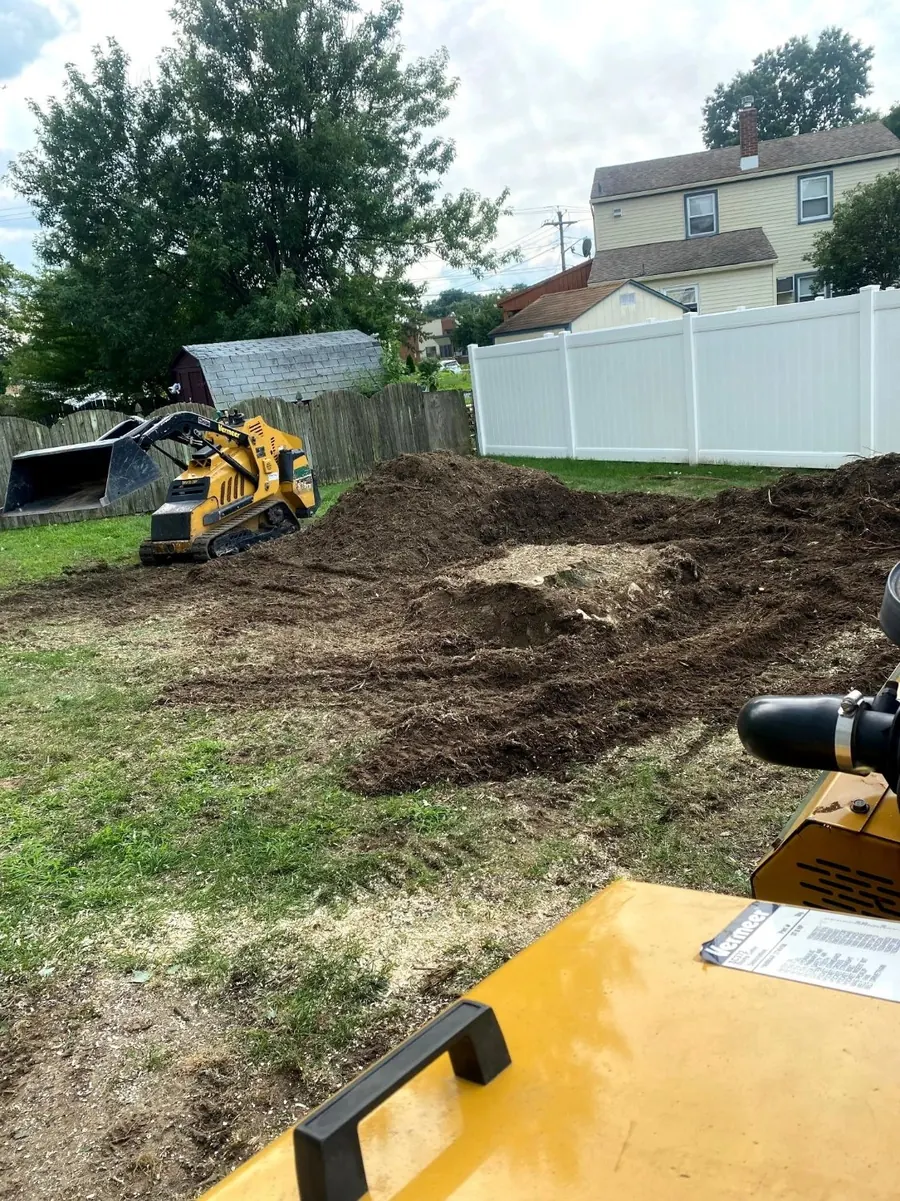
After the emergency is over, there is still work to do. Debris removal is part of our service: we chip branches, haul away wood, and clean the site so your yard is usable again. The stump is usually left for a separate visit — you can read our guide on stump grinding to see what happens next. If the fallen tree damaged your roof, gutters, or fence, you will need a roofer or contractor for those repairs, and your insurance documentation will help there. It is also worth having your remaining trees checked after a major storm. High winds can crack limbs and loosen roots in ways that are not obvious from the ground, and a tree that survived this storm may be the one that fails in the next. A free estimate includes an assessment of your other trees, and more storm-season advice is on our tree care blog.
We serve Northeast Philadelphia, Fox Chase, Bustleton, Olney, Germantown, Mount Airy, Chestnut Hill, Roxborough, Manayunk, and Rhawnhurst.
We are open 24 hours, Monday through Sunday, and we prioritize emergency calls by urgency — trees on houses and blocking roads come first. Call (267) 784-3424 and we will give you an honest time frame.
Yes. We remove trees from roofs, fences, and driveways as part of our emergency tree service, working in sections so nothing shifts unexpectedly.
Document the damage with photos first, then call both your insurance company and a tree service. The photos and receipts from the emergency work support your claim.