A tree rarely fails without warning. Learn the seven signs that a tree on your Philadelphia property has become a hazard — and what to do next.
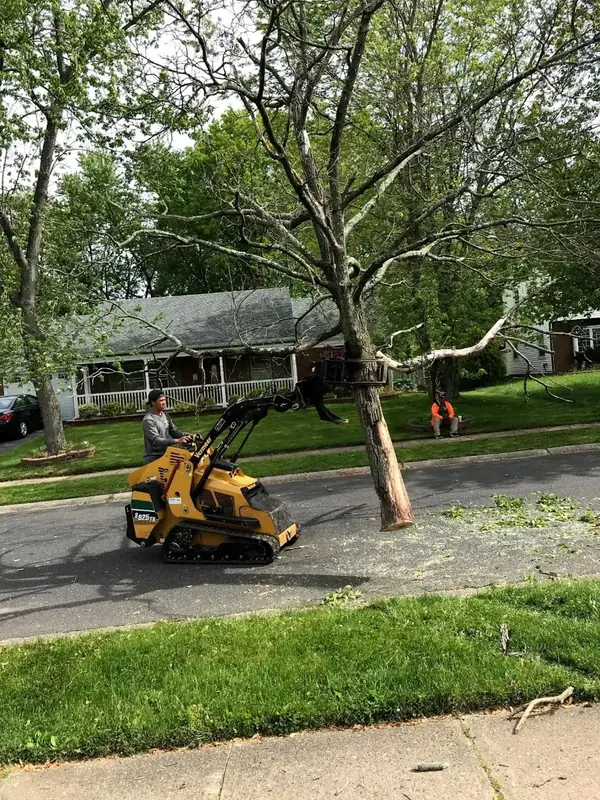
Most trees that fall or drop large limbs in Philadelphia show signs of trouble long before anything happens. The problem is that homeowners are busy, and a tree can look fine from a kitchen window while quietly weakening at the trunk or the roots. Learning to spot the warning signs costs nothing and can save you a damaged roof, a crushed fence, or worse. Walk around your trees a few times a year — after a big storm is a good moment — and look at the canopy, the trunk, and the ground around the base. If you notice one of the signs below, it is time to have the tree assessed. A free estimate from Philadelphia Tree Works LLC includes an on-site look at the tree's condition, so you can find out whether tree removal is needed, or whether trimming or pruning can save it.
The canopy is the first place trouble shows. A healthy tree leafs out evenly in spring and holds a full crown through summer. If large branches are bare while the rest of the tree is in leaf, or if the top of the tree is thinning year after year, the tree may be dying from the top down. Dead branches are brittle and heavy, and they are the most common thing to come down in a windstorm. Small dead twigs are normal on any mature tree, but thick dead limbs — especially over a roof, a driveway, or a sidewalk in Fox Chase or Olney — are a real hazard. If you see bark peeling off branches, no leaves on major limbs, or a canopy that looks noticeably thinner than it did last year, the tree needs a professional look.
The trunk is the tree's structure, and damage there is serious. Deep vertical cracks, splits where large limbs join the trunk, and hollow cavities all weaken the tree. A cavity you can fit your hand into means a large part of the trunk is already decayed inside, even if the outside looks solid. Mushrooms or shelf fungus growing on the trunk or at the base are another warning: fungi feed on decaying wood, so their presence usually means rot is active inside the tree. A tree can live for years with some internal decay, but once the trunk loses enough strength, a strong gust from a Philadelphia thunderstorm is all it takes. If you find fungus, a large cavity, or a crack that runs down the trunk, do not ignore it — get the tree assessed promptly.
Some trees grow at a slight angle all their lives and are perfectly stable. The danger is a lean that is new or getting worse. If a tree that used to stand straight is now tilting, or if you notice the lean has increased after a storm, the roots on one side may be failing. Check the ground around the base: soil that is lifted, cracked, or heaved on the side opposite the lean is a classic sign that the root plate is shifting. A leaning tree over a house, a neighbor's property, or a street in Bustleton or Rhawnhurst should be treated as urgent, especially if the lean appeared suddenly. In that case, call us at (267) 784-3424 — we are open 24 hours, Monday through Sunday, for emergency tree situations.
Not every warning sign means the tree must come down tomorrow. A tree with a few dead branches may only need trimming, and a tree with a minor lean that has been stable for years may simply need monitoring. What matters is the combination: a dead tree leaning over a roof is urgent, while a healthy tree with one cracked limb can usually be scheduled for routine work. The deciding factors are the tree's overall health, how much of it is dead or decayed, and what it could hit if it fell. If the tree threatens your home, your family, or a neighbor's property, do not wait. If you are unsure, a free estimate costs nothing and gives you a professional answer. You can also read our guide on tree removal costs in Philadelphia to understand what affects the price, and browse more advice on our tree care blog.
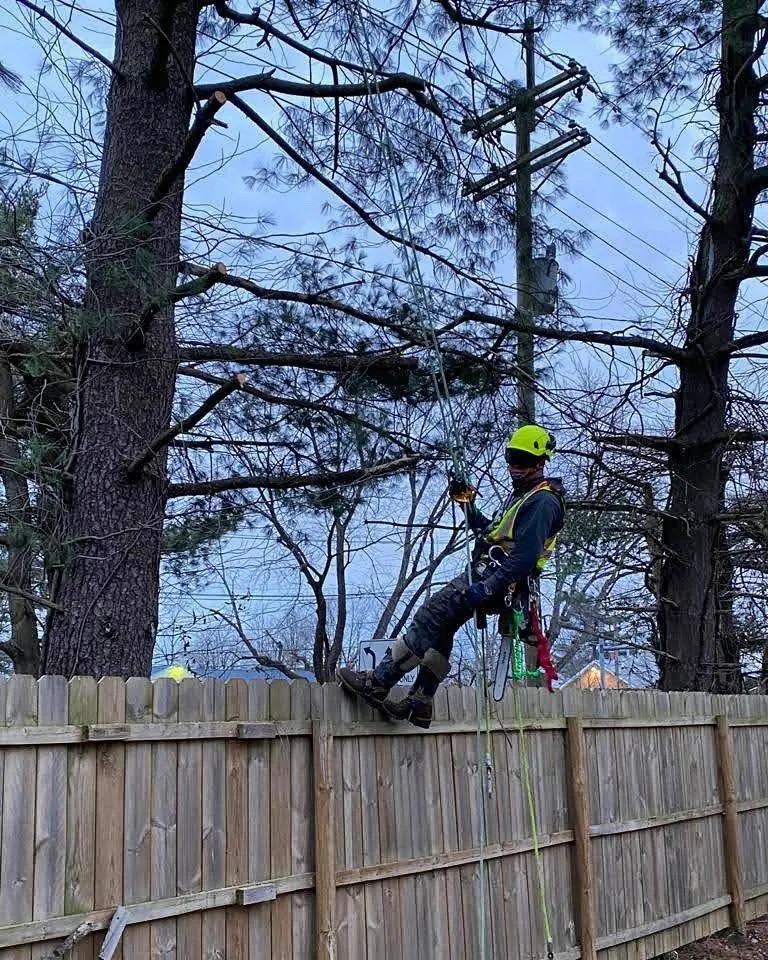
We serve Northeast Philadelphia, Fox Chase, Bustleton, Olney, Germantown, Mount Airy, Chestnut Hill, Roxborough, Manayunk, and Rhawnhurst.
Sometimes. A tree that has always leaned slightly and is otherwise healthy may be stable. A tree with a new or growing lean, or lifted soil at the base, is usually a removal candidate. An on-site assessment will tell you which one you have.
As soon as practical. Dead trees become more brittle over time and can fail without warning, especially in wind. If a dead tree is near a house, driveway, or sidewalk, schedule removal promptly.
Yes. Our free estimates include an on-site look at the tree's condition and an honest recommendation. Call (267) 784-3424 to schedule a visit.